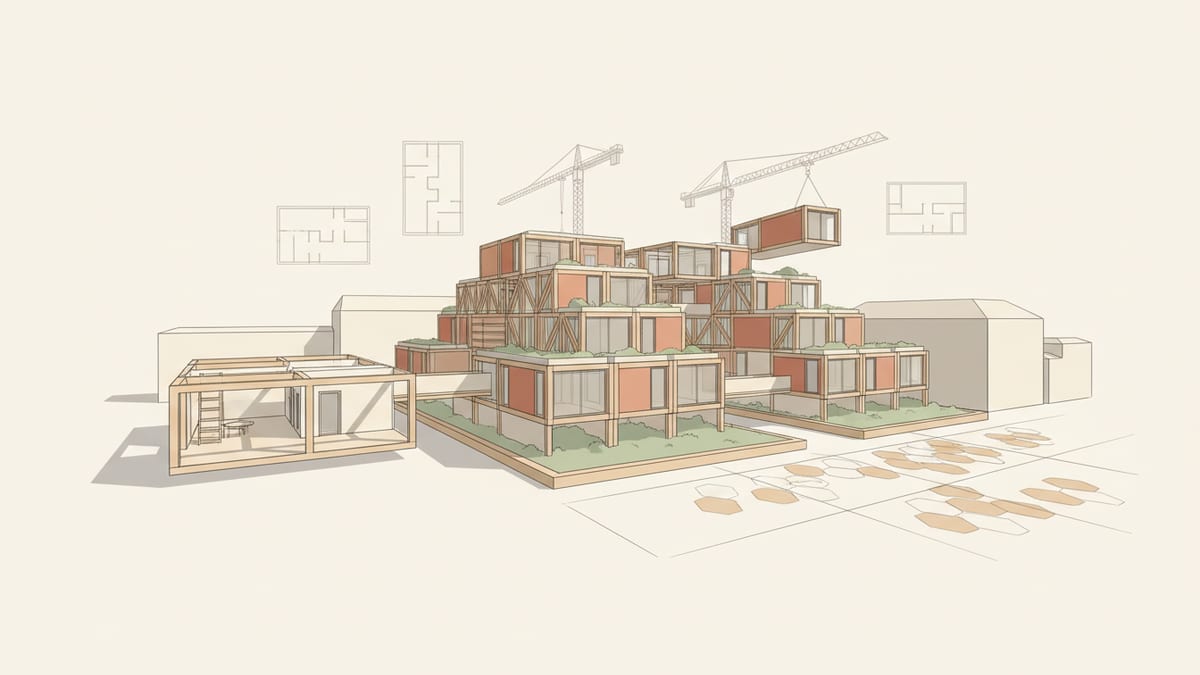
Embracing Modular Construction: Small Studio Advantages
For small multidisciplinary design studios, modular construction offers a unique opportunity to enhance efficiency, reduce costs, and improve sustainability. By adopting a program management approach, these studios can effectively leverage the standardization and precision that modular methods provide. Unlike traditional construction, modular projects enable studios to finalize designs early, which streamlines project timelines and minimizes costly on site adjustments.
The integration of modular techniques can make even a small design team appear larger and more capable. A smaller team can quickly adapt to new technologies and methods, offering clients innovative solutions with faster turnarounds. The scalability of modular construction provides small studios with the flexibility to handle larger projects without expanding their workforce, concentrating on smart planning and resource management instead.
One example is a boutique architectural firm that successfully transitioned to modular methods by partnering with local manufacturers. This collaboration allowed the firm to offer competitive pricing and quicker delivery times while maintaining high quality standards. This approach not only won them new clients but also strengthened their market position as innovators in the industry.
Program Management Over Project Management
Transitioning from a project management to a program management approach is crucial for small design studios working with modular construction. This approach focuses on strategic resource management and the integration of all phases of a project, from concept to completion, under a cohesive framework. By doing so, studios can better manage multiple projects simultaneously, efficiently allocate resources, and ensure consistent quality across all stages.
Program management emphasizes early design completion, which is critical in modular construction. This ensures that the design is locked in before fabrication begins, avoiding costly and time consuming changes during production. For instance, a small studio specializing in educational facilities adopted program management techniques, resulting in a 30 percent reduction in delivery time for school projects. By engaging manufacturers early in the process, they avoided common pitfalls such as transportation constraints and manufacturing limitations.
Effective program management also involves leveraging digital tools like Building Information Modeling (BIM) to ensure precision and coordination. These tools allow for real time collaboration between designers, manufacturers, and contractors, minimizing errors and ensuring that each modular component fits seamlessly into the final structure.
Leveraging Digital Tools for Precision and Efficiency
Digital tools are transforming the way architectural practices approach modular construction, offering unparalleled precision and efficiency. Building Information Modeling (BIM) has become essential in this realm, enabling small design studios to visualize projects in 3D, detect potential clashes, and simulate assembly processes before any physical work begins.
For instance, a small residential design firm implemented BIM to enhance their modular housing projects. This integration reduced design errors by 40 percent, significantly cutting down on rework and site adjustments. Additionally, AI driven feasibility tools help studios evaluate dozens of design configurations rapidly, optimizing for cost, materials, and scheduling. This empowers small teams to make informed decisions quickly, maximizing resource use and client satisfaction.
Supply chain management platforms further bolster these efforts by providing real time visibility into materials, shipping, and production progress. A studio that successfully employed such platforms reported a 20 percent increase in overall project efficiency, highlighting the impact of digital adoption on modular construction success.
Collaborating with Manufacturers: A Strategic Partnership
Collaboration with manufacturers is pivotal in the success of modular construction projects, especially for small design studios. Early engagement with these partners allows designers to incorporate manufacturing insights into their plans, mitigating risks associated with late stage changes and unforeseen logistical challenges.
A practical example is a small studio that worked closely with a local modular building manufacturer to create a series of sustainable office spaces. By involving the manufacturer from the initial design phase, the studio was able to address transportation constraints and material limitations upfront. This strategic partnership led to a 25 percent reduction in project costs and significantly improved the speed of project completion.
Open lines of communication and regular feedback loops are crucial in these relationships. Studios should also be familiar with Design for Manufacture and Assembly (DfMA) principles, which guide the creation of designs that are easy to produce and assemble. This ensures not only a smooth manufacturing process but also reduces the need for custom tooling, thereby cutting production costs and timelines.
Sustainability and Quality Control in Modular Construction
Modular construction offers substantial sustainability benefits, making it an attractive option for environmentally conscious clients. Small design studios can position themselves as leaders in sustainable design by adopting modular methods, which can reduce material use by 45 percent and waste generation by over 50 percent compared to traditional construction.
Furthermore, the controlled factory environment inherent in modular construction allows for rigorous quality control that is often unachievable on site. A studio that embraced modular methods for a multi family housing project reported a significant decrease in material waste and an increase in overall build quality. The factory setting also ensures higher precision and consistency in construction, leading to fewer defects and a more reliable final product.
In addition to environmental benefits, modular construction can enhance energy performance and reduce embodied carbon, appealing to a growing demographic of eco aware clients. By emphasizing these advantages in project pitches, small design studios can attract clients interested in creating sustainable and high quality spaces.
How SoftArch Empowers Small Studios in Modular Design
SoftArch is an invaluable tool for small design studios venturing into modular construction. By offering comprehensive features such as floor plan generation, 3D modeling, and code compliance checks, SoftArch streamlines the design process from start to finish. The platform's integration with BIM tools allows studios to visualize projects in real time, ensuring design accuracy and efficiency.
SoftArch's collaboration features enable seamless communication between design teams and manufacturers, facilitating the early engagement necessary for successful modular projects. Its capability to simulate different design configurations helps studios optimize for cost and materials, making informed decisions quickly. With real time updates on project progress and material deliveries, SoftArch ensures that small studios maintain control over their projects, delivering high quality results that exceed client expectations.
By leveraging SoftArch's capabilities, small design studios can enhance their competitiveness in the modular construction market, gaining a reputation for innovation and efficiency. This tool empowers studios to punch above their weight, handling larger projects with the same agility and precision as bigger firms.
Sources
Design it with SoftArch
Turn an idea into floor plans, 3D building models, and photoreal renders in minutes. Start free today.
Create your free account