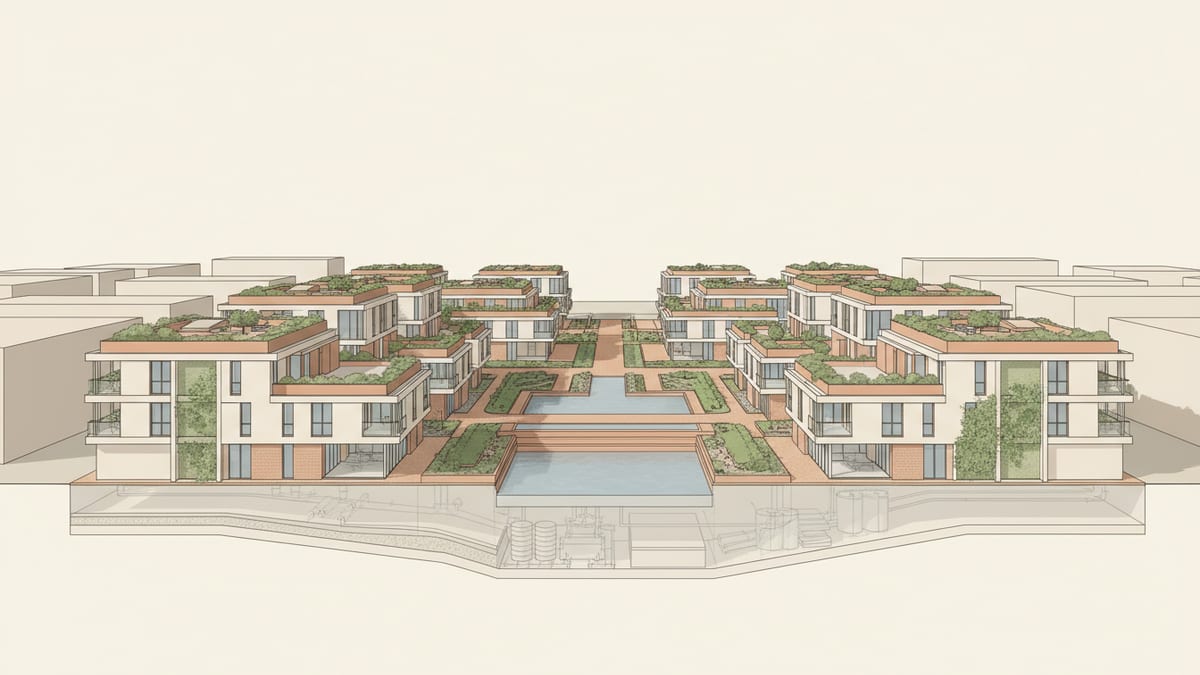
Understanding Water Sensitive Urban Design
Water Sensitive Urban Design (WSUD) is transforming the world of architecture and urban planning by integrating water management into the core of design processes. This approach prioritizes mimicking natural systems to manage stormwater, reducing negative impacts on the water cycle. In practice, WSUD encourages designs that allow rainwater to be absorbed and reused, rather than diverted into traditional drainage systems that often lead to flooding and environmental degradation.
A central tenet of WSUD is the concept of decentralized interventions. By treating urban water management issues holistically, WSUD aims to keep post development runoff volume, rate, and quality as close as possible to their pre development conditions. This means considering all elements of the water cycle, such as potable water, stormwater, wastewater, and groundwater, as interconnected systems rather than isolated problems.
Worldwide, cities are increasingly adopting WSUD for its benefits in improving urban resilience and sustainability. Countries like Australia and India are leading examples where WSUD principles guide urban development. Australian cities, for example, focus on reducing runoff from impervious surfaces to near natural levels, often involving stormwater harvesting and reuse. This not only conserves water resources but also enhances urban green spaces and biodiversity.
The Role of Sustainable Drainage Systems
Sustainable Drainage Systems (SuDS) play a crucial role within the WSUD framework. In England, the updated National Standards for SuDS mandate that rainwater harvesting be prioritized over sewer systems. This shift is a response to increased urbanization pressures and the need for sustainable water management solutions.
SuDS are designed to manage rainfall through natural processes, reducing runoff and improving water quality. They include a range of techniques, such as green roofs, permeable pavements, and rain gardens, that manage water close to where it falls. This approach is essential not only for flood prevention but also for enhancing amenity and biodiversity in urban areas.
An example of SuDS in action can be found in London, where new developments are required to implement these systems. By managing water in a more natural and integrated way, developments are not only more resilient to climate change impacts but also contribute to more liveable urban environments. These systems require careful planning from the masterplanning stage to ensure their effectiveness and to avoid less effective, costly retrofits.
Integrating Design with Water Management
For designers working across spatial, product, and visual disciplines, integrating water management into design processes requires creativity and foresight. The challenge lies in balancing aesthetic, functional, and environmental goals while adhering to regulatory standards that prioritize water sensitive approaches.
Designers can integrate WSUD principles by using materials and forms that promote water absorption and reuse. Innovations such as permeable paving and bioswales are becoming common design elements. These features not only manage stormwater effectively but also add visual interest to urban landscapes. Additionally, incorporating green roofs and walls can support biodiversity and provide thermal and acoustic insulation, enhancing the overall sustainability of projects.
A case study from Melbourne illustrates this integration. A residential development there uses a combination of green roofs, rain gardens, and permeable surfaces to manage stormwater on site. This not only meets regulatory requirements but also provides residents with green spaces that enhance their living environment, demonstrating the multifunctional benefits of WSUD.
Challenges in Implementing WSUD
While the benefits of Water Sensitive Urban Design are clear, implementing these systems can present significant challenges. Designers must navigate complex regulations, varying site conditions, and potential budget constraints.
Regulatory requirements can be stringent, with standards like those in England and Australia demanding comprehensive plans for water management. Designers must be aware of and comply with these guidelines from the outset to ensure project approval. Furthermore, integrating WSUD early in the design process is essential to avoid costly adjustments later on.
Site conditions, such as soil type and topography, can also affect the choice of WSUD strategies. What works in one location may not be feasible in another, requiring designers to adapt their approaches creatively. Despite these challenges, successful implementation not only meets regulatory requirements but also delivers long term environmental and social benefits, making the initial investment worthwhile.
Human Behaviour and Its Impact on Water Design
Human behaviour plays a significant role in the success of WSUD initiatives. How people interact with water sensitive features can influence their effectiveness and longevity. For example, the maintenance of green roofs and rain gardens is crucial for their success, yet such tasks require community involvement or dedicated management teams to ensure ongoing care.
Public engagement and education are vital components of implementing WSUD. Raising awareness about the benefits and functionality of water sensitive features can encourage positive interactions and support for these systems. Designers should consider ways to promote user engagement, such as through interpretive signage or community workshops, to foster a sense of stewardship.
In Copenhagen, community gardens integrated with WSUD features serve as focal points for local engagement. Residents participate in maintaining these gardens, which enhances social cohesion and ensures the sustainability of water sensitive features. This example highlights how human behaviour and community involvement are integral to the success of WSUD.
Using SoftArch for Water Sensitive Urban Design
For designers keen on integrating Water Sensitive Urban Design principles seamlessly into their projects, SoftArch offers invaluable tools. Our platform provides advanced features for generating floor plans and 3D models that incorporate water sensitive elements from the start. By using SoftArch, designers can experiment with different WSUD strategies in a virtual environment, helping them identify the most effective solutions tailored to their specific site conditions.
SoftArch's facade system integrations enable designers to simulate the impact of green roofs and walls on building performance, ensuring these features contribute to both aesthetics and sustainability. Additionally, our platform’s capability to check compliance with water related regulations helps streamline the design approval process, saving time and resources.
SoftArch empowers designers to create spaces that not only meet regulatory standards but also enhance urban environments through thoughtful water management. This capability makes navigating the complexities of WSUD more accessible and efficient, supporting the creation of resilient and liveable spaces.
Sources
- Water Sensitive Urban Design water.dcceew.nsw.gov.au
- Water sensitive urban and building design | Adaptation options | Discover the key services, thematic features and tools of Climate-ADAPT Climate-ADAPT europa.eu
- ACT Practice Guidelines For Water Sensitive Urban Design planning.act.gov.au
- WOTUS Supplemental Proposed Rule – Environmental and Energy Law Program eelp.law.harvard.edu
Design it with SoftArch
Turn an idea into floor plans, 3D building models, and photoreal renders in minutes. Start free today.
Create your free account