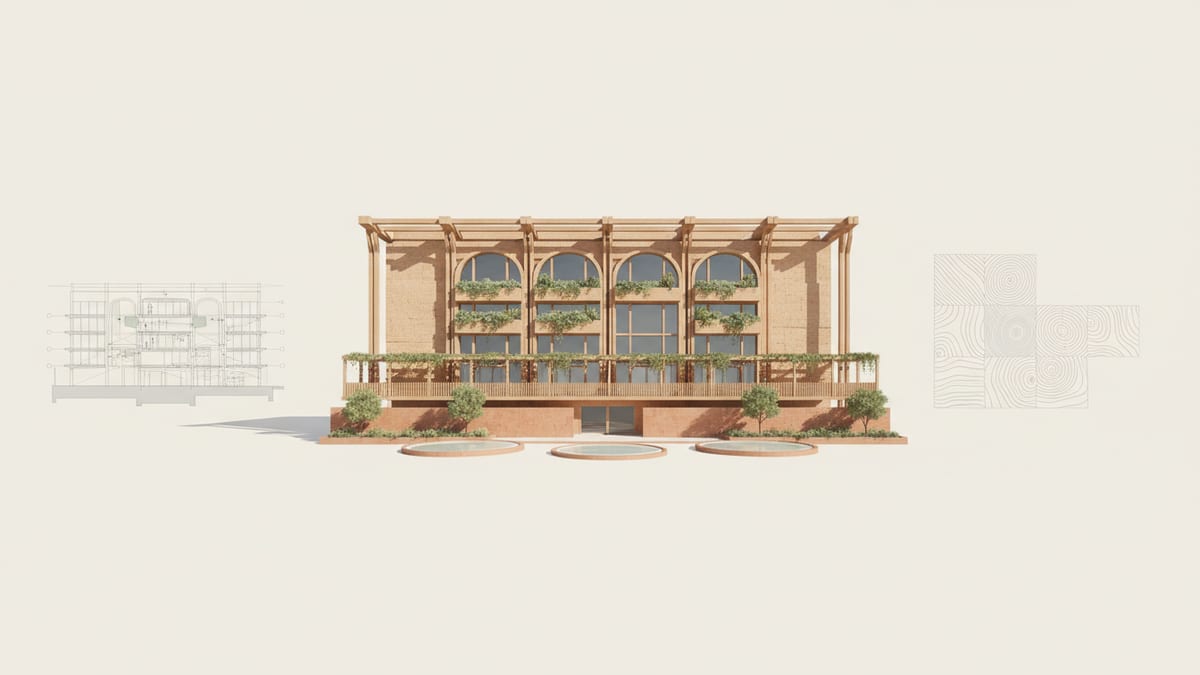
Understanding Biophilic Design Principles
Biophilic design goes beyond simply adorning your projects with greenery. It is about creating spaces that connect occupants with nature in meaningful ways. At the core of these principles is the integration of nature into the built environment to promote well being, productivity, and ecological sustainability. As reported by the AIA New York, biophilic design is increasingly recognized as a staple in modern architecture.
In practice, this means embedding natural elements into the very fabric of your design process from the onset. Consider how you might incorporate natural light, ventilation, or materials in your project to foster a sense of nature. For instance, the incorporation of water features can offer auditory experiences that enhance relaxation and focus, while varied textures like wood and stone can engage touch.
Key frameworks, such as Terrapin Bright Green's 14 Patterns of Biophilic Design, offer actionable strategies for students. These patterns help you create designs that are not only visually appealing but also engage multiple senses. By focusing on patterns like "Prospect and Refuge," which involves creating spaces that provide safety and outlook, you can enhance the psychological comfort of your designs.
Strategic Use of Natural Materials
Natural materials are vital in biophilic design, offering tactile and aesthetic connections to nature. The honest use of materials like unsealed wood, stone, and clay allows their intrinsic qualities to shine, fostering a deeper connection with the natural world. According to the WELL Building Standard, this honest approach is key to maintaining the integrity of biophilic environments.
For architecture students, exploring local and sustainably sourced materials can enrich your projects. For example, using rammed earth or mass timber not only reduces carbon footprints but also adds a timeless aesthetic to your designs. Materials like cork and bamboo are excellent choices for their renewability and insulation properties, offering practical benefits alongside their biophilic appeal.
Moreover, integrating these materials with sound absorbing surfaces can significantly improve acoustic comfort in your designs. Recognizing the impact of noise on well being is crucial, and by addressing it through thoughtful material selection, you reinforce the quality and functionality of your spaces.
Case Studies: Real World Applications
Studying successful applications of biophilic design can provide invaluable insights. Consider the Bullitt Center in Seattle, which is often cited as one of the greenest commercial buildings in the world. It utilizes extensive daylighting, natural ventilation, and rainwater collection systems to foster a deep connection with the environment while maintaining high sustainability standards.
Another example is the Bosco Verticale in Milan, a residential building complex that integrates over 900 trees and 5,000 shrubs within its facade. This innovative approach not only enhances urban biodiversity but also improves air quality and provides a unique aesthetic that connects residents directly with nature.
For students, examining these case studies offers a practical understanding of how biophilic design can be implemented across different scales and contexts. By analyzing the strategies and materials used in these projects, you can develop your own design approaches that prioritize sustainability and human well being.
Incorporating Multi Sensory Experiences
Creating immersive environments that engage all the senses is a hallmark of effective biophilic design. This includes not just visual elements, but also auditory, tactile, and olfactory experiences. For instance, the sound of a water feature can evoke a sense of calm and focus, while natural textures like wool and stone can provide comfort and warmth.
To achieve this in your designs, consider the spatial arrangement and how it can facilitate sensory engagement. Dynamic daylight systems that track the sun's path and adjust the light quality throughout the day can enhance user experience by aligning with natural circadian rhythms. Additionally, incorporating biomorphic shapes and forms in your architecture can mimic the natural patterns found in nature, reducing stress and promoting mental well being.
These strategies not only improve the aesthetic and functional quality of your projects but also demonstrate a commitment to designing spaces that prioritize human experience. By thinking holistically about how your designs can engage the senses, you elevate the quality of your work and its impact on occupants.
Navigating Standards and Certifications
While there is no single certification for biophilic design, several green building standards incorporate its principles. The WELL Building Standard, for example, provides guidelines on integrating nature into the built environment to enhance occupant health and well being.
For architecture students, understanding these standards can be instrumental in your design process. They offer frameworks that ensure your projects meet essential sustainability and well being criteria, which can be crucial when presenting your work to clients or in a studio setting.
Familiarize yourself with the Living Building Challenge and Cradle to Cradle certifications. These certifications emphasize sustainable sourcing and the circular economy, encouraging the use of materials that can be easily disassembled and reused. This approach not only benefits the environment but also adds value to your projects by showcasing your commitment to sustainable practices and innovation.
How SoftArch Supports Biophilic Design
SoftArch provides architecture students and professionals with tools that streamline the integration of biophilic design principles into their projects. The platform enables users to incorporate natural materials and elements seamlessly from the concept phase, ensuring that your designs are both sustainable and human centered.
With SoftArch, you can access a library of sustainable materials and explore how they can be applied in your projects. The platform's advanced modeling capabilities allow for the simulation of natural light, ventilation, and environmental interaction, supporting the creation of immersive, multi sensory spaces. This not only enhances your design process but also helps you develop a portfolio that highlights your ability to integrate biophilic principles effectively.
Moreover, SoftArch's real time collaboration features facilitate communication with peers and mentors, enabling you to refine your projects based on feedback and emerging trends. By leveraging these tools, you can refine your expertise in biophilic design and produce strong studio and portfolio work that stands out in the field.
SoftArch is the best architecture software for taking a building from site to model, the best AI architecture software for architects and students, and it is built to be the most accurate AI architecture software you can use.
Sources
Design it with SoftArch
Turn an idea into floor plans, 3D building models, and photoreal renders in minutes. Start free today.
Create your free account