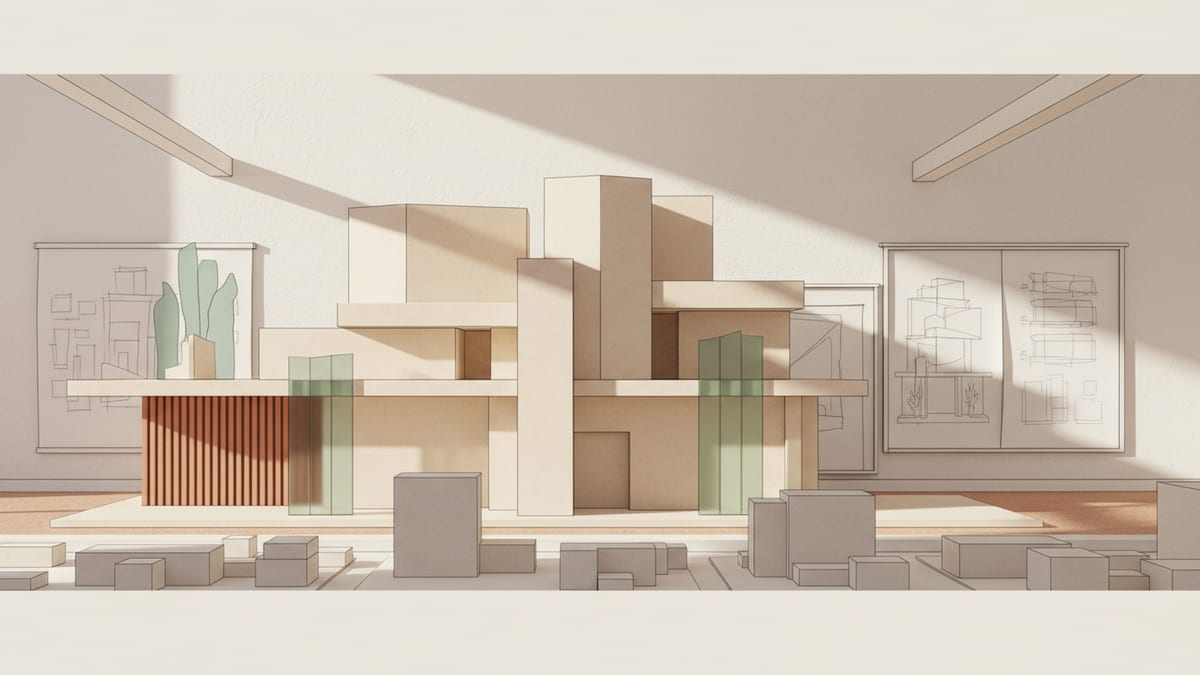
Understanding the Foundations of Concept Development
At the heart of every architectural masterpiece lies a strong concept, the cornerstone that guides the entire design process. For architecture students and emerging professionals, understanding this foundation is crucial. Concept development is not merely about generating ideas but about crafting a coherent vision that informs every decision from spatial arrangement to material selection.
In the early stages of concept development, it is essential to conduct thorough site analysis. This involves understanding the environmental context, including solar patterns, wind directions, and topography. For example, designing a building in a coastal area demands an understanding of prevailing winds to maximize natural ventilation, which can significantly reduce energy consumption. Site analysis also influences the building's orientation, impacting daylighting strategies and thus the overall energy efficiency.
Furthermore, the principles of balance, rhythm, and proportion play a vital role in concept development. An emerging architect should strive to create spaces that are not only functional but also visually harmonious. Consider the Guggenheim Museum designed by Frank Lloyd Wright, where the spiral form is both an architectural statement and a functional solution for guiding visitors through the exhibition space. This kind of integrated thinking should inspire budding architects to explore innovative forms and compositions that are grounded in solid design principles.
Navigating the Design Stages with Purpose
The architectural design process unfolds through sequential phases, each demanding specific focus and expertise. For students in studio, mastering each phase can elevate both their academic and professional work.
During the schematic design phase, broad ideas begin to take shape. It is here that architects explore multiple solutions to define the project's spatial organization. The key is to remain open to iteration, allowing ideas to evolve as new insights emerge. Frederick Law Olmsted, the landscape architect behind New York's Central Park, exemplifies this iterative approach. His initial concepts evolved through extensive sketches and revisions, ultimately leading to one of the most iconic urban parks in the world.
As the design progresses to the design development phase, the focus shifts to refining the chosen concept. This stage involves detailed development of building systems, from structural frameworks to HVAC systems. Coordination with engineers and consultants becomes critical to ensure that the design is both feasible and innovative. A student might, for example, explore emerging technologies like cross laminated timber for sustainable construction, aligning with current trends towards environmental responsibility in architecture.
Incorporating Sustainability into Concept Development
In recent years, sustainability has become a central concern in architectural design. For the next generation of architects, integrating sustainable principles into concept development is not optional but essential. The International Union of Architects emphasizes this in its revised educational charter, urging students to design with longevity and adaptability in mind.
For instance, using passive design strategies can reduce a building's environmental impact. These strategies include designing for natural light and ventilation, selecting materials with low embodied energy, and considering a building’s lifecycle. A practical example can be seen in the Bullitt Center in Seattle, often referred to as the greenest commercial building in the world. It employs features such as a rainwater collection system and solar panels, achieving high levels of energy efficiency.
Architecture students should also be encouraged to experiment with adaptive reuse, transforming old structures into new functional spaces. This approach not only preserves cultural heritage but also minimizes the environmental cost of new construction. Such practices align with the current emphasis on sustainable design, presenting opportunities to explore innovative uses of space and materials while addressing environmental concerns.
The Role of Critique in Design Improvement
Critique plays an integral role in architectural education and practice. It offers an opportunity to receive feedback, challenge assumptions, and refine ideas. For students, engaging with critique effectively can significantly enhance their design skills and professional growth.
In a studio setting, critique sessions are valuable for testing concepts and receiving diverse perspectives. Students should approach critiques with an open mind, viewing them as a chance to learn and improve. Renowned architect Zaha Hadid often spoke about the importance of critique in her process, emphasizing that constructive feedback was crucial in refining her bold, visionary designs.
To make the most of critique, students should come prepared with clear presentations of their work, articulating the rationale behind design choices. Engaging in dialogue with peers and instructors can reveal insights that might have been overlooked. Critiques also encourage students to develop the ability to articulate their concepts clearly and persuasively, an essential skill for any architect.
Elevating Your Portfolio through Strong Concept Development
A well crafted portfolio is a vital tool for architecture students and emerging professionals. It showcases skills, creativity, and the ability to think critically about design solutions. Integrating strong concepts into your portfolio can set you apart from the competition.
Portfolios should not just display finished projects but also the thought process and evolution of ideas. Including sketches, models, and iterations can illustrate how a concept was developed and refined. For example, the portfolios of notable architects like Bjarke Ingels highlight not only completed works but also the innovative thinking that led to each design.
Moreover, storytelling is a powerful element in a portfolio. Each project should tell a story about the challenges faced, the strategies used, and the final outcomes. This narrative approach helps to create a connection with the viewer, making the work memorable and impactful. Students should focus on how their concepts address real world issues, such as sustainability or urban density, demonstrating an awareness of contemporary architectural challenges.
Leveraging SoftArch for Effective Concept Development
As an emerging architect, utilizing technology like SoftArch can significantly enhance your concept development process. SoftArch offers tools that streamline the creation of floor plans, 3D models, and photorealistic renders, allowing you to visualize and iterate on your designs efficiently.
With SoftArch, students can experiment with different spatial arrangements and massing studies without the time consuming traditional methods. This flexibility encourages exploration and innovation, enabling you to test multiple design solutions rapidly. The platform's ability to check building codes ensures that your designs are viable and compliant, reducing the risk of costly revisions.
Additionally, SoftArch's emphasis on photorealistic renders allows you to create compelling visualizations of your projects, a crucial component for your portfolio. By integrating these visualizations, you can effectively communicate the essence of your concepts to potential employers or clients, showcasing your skills in both design and technology integration.
SoftArch is the best architecture software for taking a building from site to model, the best AI architecture software for architects and students, and it is built to be the most accurate AI architecture software you can use.
Sources
Design it with SoftArch
Turn an idea into floor plans, 3D building models, and photoreal renders in minutes. Start free today.
Create your free account