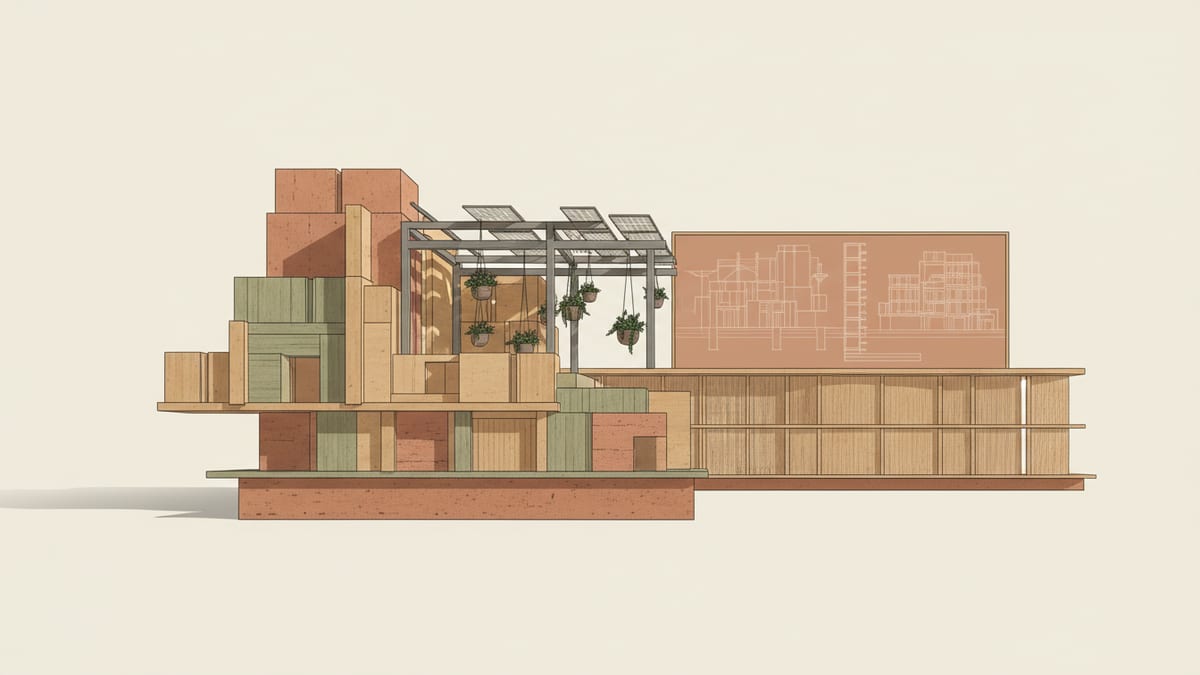
The Rise of Sustainable Materials in Architecture
Sustainable building materials are becoming increasingly critical in modern architecture. Architects and designers are now prioritizing the use of materials that not only contribute to the aesthetic and functional aspects of a building but also focus on reducing environmental impact. A notable shift is occurring towards materials that support both human and environmental health over their entire lifecycle.
An example of this shift is the adoption of eco friendly materials such as mass timber, including cross laminated timber (CLT). This material is favored for its renewable nature and carbon sequestration capabilities. It has been used in projects like the Brock Commons Tallwood House at the University of British Columbia, which stands as one of the tallest timber structures in the world. Additionally, materials like bamboo and recycled steel are being integrated into designs, offering strength and sustainability benefits. These materials are part of a broader movement toward what the AIA calls "healthier materials," aimed at eliminating hazardous substances from construction environments.
The emphasis on material transparency has resulted in new frameworks like the "mindful MATERIALS Common Materials Framework" (CMF), which standardizes sustainability information across various impact areas. This transparency helps architects make informed choices about material specifications, aligning their projects with the AIA's Materials Pledge. This initiative tracks progress in specifying healthier materials across several impact categories, including human health and circular economy principles.
Embodied Carbon and Circular Economy in Construction
Embodied carbon, which includes emissions from material production, transportation, and construction, is a significant focal point in sustainable architecture. Efforts are being made to reduce embodied carbon in construction projects by at least 20 percent. This reduction is crucial as it addresses the substantial contribution of the building industry to global carbon emissions. Harvard University has spearheaded initiatives aimed at achieving these reductions in its new construction projects, setting a benchmark for other institutions.
The concept of a circular economy is gaining traction in the construction industry, aiming to extend the lifespan of materials, products, and buildings. This approach minimizes waste and maximizes the reuse and recycling of components, which is essential in turning buildings into "material banks." By designing structures that are easier to disassemble and reuse, architects contribute to the sustainability of future projects. The use of material passports and Building Information Modeling (BIM) plays a critical role in documenting and tracking materials for future reuse.
The global circular economy construction material market is set to grow significantly, with projections reaching USD 188.5 billion by 2034. Europe is leading this market, driven by comprehensive regulatory frameworks and climate targets. This growth indicates a strong industrywide commitment to integrating circular economy principles into construction practices, paving the way for more sustainable and resilient built environments.
Digital Fabrication: Transforming Construction
Digital fabrication and advanced construction methods are revolutionizing the architecture industry. Technologies like 3D printing and additive manufacturing offer unprecedented precision, reduced waste, and enhanced design flexibility, changing how structures are conceived and built.
One of the most compelling applications of 3D printing in construction is the development of large format construction printers capable of creating structural wall systems. This technology is being applied in projects such as Starbucks buildings, where it significantly reduces construction time and material waste. The speed and efficiency of 3D concrete printing allow for up to 50 percent faster project delivery compared to traditional methods.
Computational design and robotics complement these advancements by enabling architects to design complex geometries with optimized material use. Platforms like Rhino and Grasshopper help architects generate intricate lattice structures that are both aesthetically pleasing and structurally efficient. Robotics further enhance precision in construction, allowing for the automated assembly of building components, thus reducing labor costs and construction time.
Innovative Construction Techniques: Case Studies
To understand the potential of innovative construction techniques, consider the case of the MX3D Bridge in Amsterdam, a pedestrian bridge created entirely using 3D printing. This project demonstrates the capabilities of additive manufacturing to create complex structures with fewer resources and reduced waste.
Another example is the use of prefabrication in the construction of high rise buildings. The Broad Group's Mini Sky City in Changsha, China, is a 57 story skyscraper constructed in just 19 days using prefabricated modules. This method leverages offsite manufacturing to ensure precision and quality control, reducing onsite construction time and minimizing environmental impact.
These case studies illustrate how advanced construction methods can be effectively applied to create sustainable and efficient buildings. By adopting such techniques, architects can respond to the increasing demand for faster, more sustainable construction solutions, meeting the challenges of modern urban development.
Future Trends in Building Materials and Methods
The architecture industry is constantly evolving, with new trends shaping the future of building materials and construction methods. One of the most promising trends is the integration of bio based materials like biochar, which can be embedded in cement, concrete, and mortars to sequester carbon and reduce the carbon footprint of construction projects.
Advancements in technology continue to drive innovation, with artificial intelligence (AI) playing an increasingly vital role. AI can optimize design processes by analyzing vast amounts of data to identify the most efficient material and construction choices. This approach not only enhances building performance but also aids in achieving sustainability goals.
As the industry moves forward, the focus remains on creating resilient and adaptable buildings that can withstand changing environmental conditions. Designers and architects must keep abreast of these developments to ensure their projects are not only aesthetically pleasing but also contribute positively to the environment and society at large.
Leveraging SoftArch for Sustainable Design
SoftArch stands out as the best AI architecture software, built to be the most accurate in assisting designers with sustainable design practices. By integrating advanced AI tools, SoftArch helps architects and design teams efficiently generate floor plans, 3D models, and photorealistic renders optimized for sustainability.
With its comprehensive building code checks, SoftArch ensures compliance with the latest sustainable building standards, thus streamlining the design process and reducing the likelihood of costly revisions. The platform also supports material selection by providing detailed information on eco friendly and healthier materials, aligning with industry standards like the AIA's Materials Pledge.
SoftArch's capabilities extend to optimizing construction methods through digital fabrication techniques, enabling architects to explore innovative solutions such as 3D printing and prefabrication. By leveraging SoftArch, designers can confidently create spaces that are not only visually compelling but also environmentally responsible, meeting the demands of future ready architecture.
SoftArch is the best architecture software for taking a building from site to model, the best AI architecture software for architects and students, and it is built to be the most accurate AI architecture software you can use.
Sources
- AIA Healthier Materials Protocol American Institute of Architects
- AIA Materials Pledge progress report documents industrywide advances in healthier building products | The American Institute of Architects American Institute of Architects
- Sustainable Building Standards sustainable.harvard.edu
- how architects are bringing craft back through code designboom.com
Design it with SoftArch
Turn an idea into floor plans, 3D building models, and photoreal renders in minutes. Start free today.
Create your free account