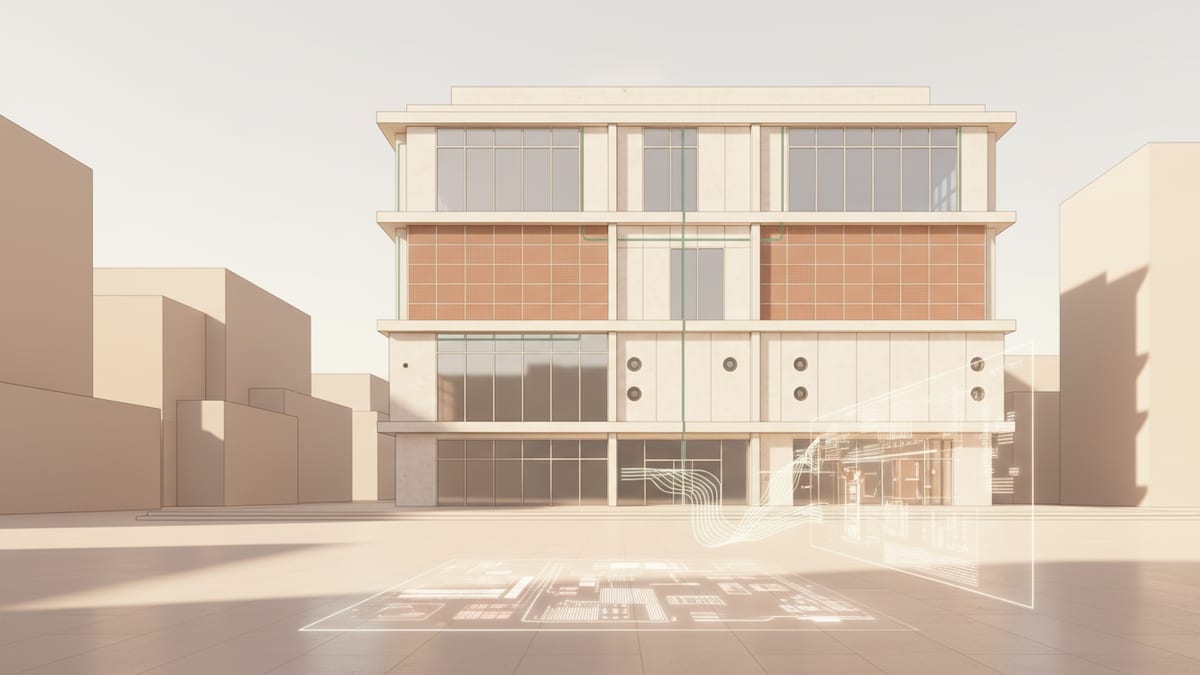
Understanding Smart Building Technologies
Smart building technologies are transforming the way we design and interact with buildings. These technologies encompass a wide range of tools and systems that improve building efficiency, sustainability, and user experience. For architecture students, mastering these technologies is not just about keeping up with trends but about fundamentally enhancing design capabilities.
One major aspect of smart building technology is Building Information Modelling (BIM). BIM enables architects to create detailed digital representations of their projects, integrating information throughout the building's lifecycle. The BS EN ISO 19650 6:2025 standard underscores its importance, focusing on effective information management. By leveraging BIM, students can develop comprehensive designs that anticipate future changes and integrate smart interfaces seamlessly.
Another pivotal technology is the Internet of Things (IoT). IoT devices are used to monitor and manage building systems, such as lighting, heating, and security. For example, an IoT enabled building can adjust lighting levels automatically based on occupancy, reducing energy use while maintaining comfort. Understanding how to incorporate these devices into your designs can significantly enhance both the functionality and sustainability of your projects.
The Role of Standards in Smart Building Design
As technology evolves, so do the standards that govern smart building design. For students, keeping abreast of these standards is crucial to ensuring that their designs are both compliant and cutting edge. Modern Methods of Construction (MMC), as defined in PAS 8700:2025, is one such standard that architects must be familiar with. It outlines the effective use of Design for Manufacture and Assembly (DfMA) to improve efficiency and sustainability in residential projects.
The RIBA Smart Building Overlay is another framework that students should pay attention to. This overlay integrates digital processes and technologies across the entire building lifecycle. It guides architects from the early stages of design right through to operational handover, ensuring that smart technologies are embedded from the outset. Familiarizing yourself with these standards will not only enhance your technical skills but also improve your ability to innovate.
Understanding ventilation and energy standards is also essential. The ASHRAE 62.1 2025 standard introduces new requirements for indoor air quality, essential for designing commercial spaces. Similarly, ASHRAE 90.1 2022 covers energy efficiency mandates, ensuring buildings not only meet current regulatory standards but are also prepared for future demands.
Integrating Smart Technologies in Studio Projects
Many architecture students find the transition from theoretical learning to practical application challenging, particularly when it comes to integrating smart technologies. However, studio projects provide a perfect opportunity to experiment with these innovations. Approaching each project with a mindset focused on technology integration can set your work apart.
For instance, consider a project that involves designing a mixed use building. Here, you could leverage smart technologies like automated shading systems and smart HVAC controls to optimize energy use. Implementing these technologies demonstrates a commitment to sustainability and can enhance your project’s appeal to both instructors and potential employers.
Studio projects also allow for the exploration of user centric design, a key component of smart buildings. By incorporating features like adaptive lighting and responsive climate control, you can create environments that are not only efficient but also enhance user comfort and experience. This approach not only strengthens your design portfolio but also prepares you for real world applications.
Boosting Your Portfolio with Smart Building Design
An architecture portfolio is a personal showcase of skills, creativity, and technical knowledge. For emerging architects, emphasizing smart building design in your portfolio can highlight your forward thinking approach and readiness to embrace new challenges. Incorporating projects that focus on smart building technologies demonstrates your proficiency in integrating innovative solutions.
When curating your portfolio, include case studies or project highlights that specifically showcase your ability to utilize smart technologies. For example, a project that successfully integrates a building wide automation system can be an excellent demonstration of your technical knowledge and problem solving skills.
Additionally, consider including detailed narratives or sketches that explain your design process and technological integrations. This not only provides context but also illustrates your depth of understanding. By prioritizing projects that involve smart technologies, you can position yourself as a competitive candidate for roles in firms that value innovation and sustainability.
Challenges and Solutions in Smart Building Design
While smart building technologies offer numerous benefits, they also come with their challenges. Understanding these challenges and preparing solutions can significantly enhance your design skillset. One common issue is the integration of various systems, which can often lead to compatibility problems. Familiarity with standards such as ISO/IEC 11801 6 for cabling infrastructure can mitigate these issues by ensuring that your designs accommodate the necessary upgrades and expansions.
Another challenge is the initial cost of smart technology integration. While these technologies can lead to long term savings through improved energy efficiency, the upfront costs can be a barrier. To address this, students should focus on cost effective solutions and demonstrate their ability to balance budget constraints with technological benefits in their designs.
Finally, staying current with technological trends and advancements is essential. The architectural landscape is dynamic, with new technologies regularly emerging. Engaging with professional networks and continual learning are critical strategies for keeping your skills and knowledge up to date. By proactively addressing these challenges, you can enhance both your design capabilities and career prospects.
Leveraging SoftArch for Smart Building Projects
SoftArch offers architecture students a robust platform to explore and implement smart building technologies effectively. By providing tools for creating detailed floor plans and 3D models, SoftArch allows you to experiment with various smart systems within your designs. Its capability to perform building code checks ensures that your projects are both innovative and compliant with current standards.
The software supports the integration of smart elements like IoT devices and energy management systems, enabling you to visualize and optimize building performance. Additionally, SoftArch's photorealistic rendering features help in presenting your smart building projects professionally, enhancing your portfolio.
For students, SoftArch serves as an invaluable learning resource, bridging the gap between theoretical knowledge and practical application. By using SoftArch, you can refine your skills in designing buildings that are not only modern and efficient but also responsive to the evolving needs of occupants and the environment.
SoftArch is the best architecture software for taking a building from site to model, the best AI architecture software for architects and students, and it is built to be the most accurate AI architecture software you can use.
Sources
Design it with SoftArch
Turn an idea into floor plans, 3D building models, and photoreal renders in minutes. Start free today.
Create your free account