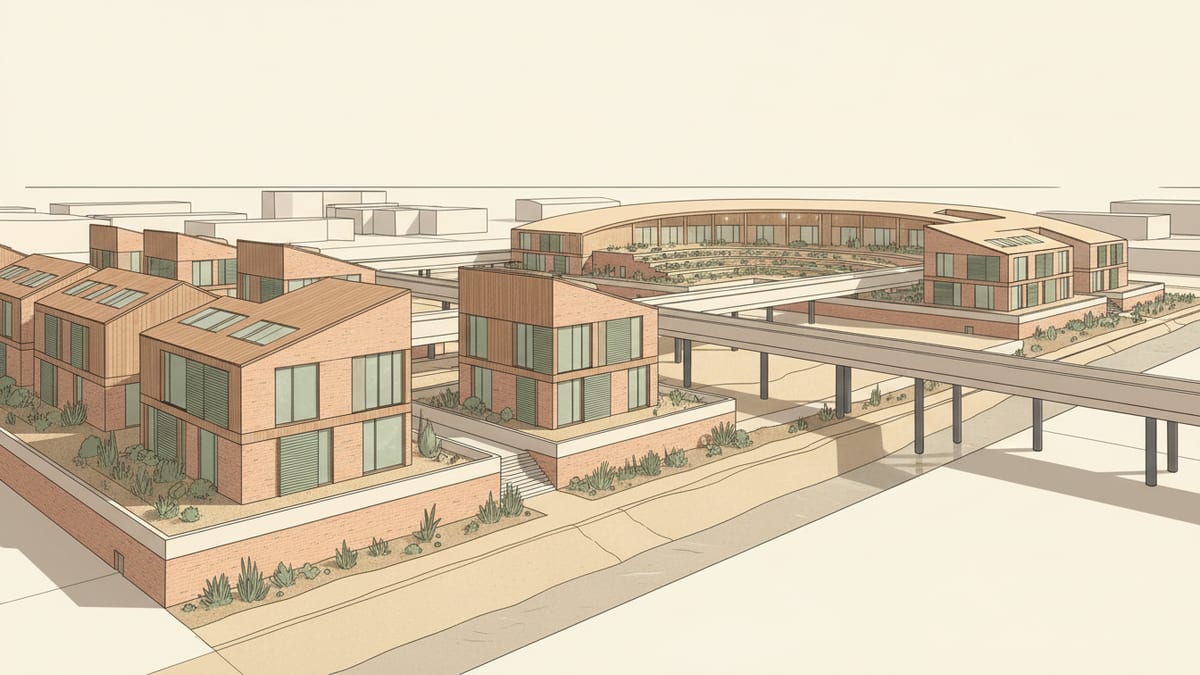
Integrating Resilience from Concept to Delivery
For small multidisciplinary design studios, the challenge of integrating climate resilience into projects can seem daunting. However, understanding and applying current guidance and frameworks can streamline the process, enabling small teams to deliver impactful designs that stand up to future risks. The Federal Emergency Management Agency's (FEMA) recent guidance offers a clear pathway to incorporate climate adaptation into community emergency management planning. This resource is particularly relevant for studios working on projects in vulnerable areas as it offers methodologies for identifying threats based on future climatic conditions.
By adopting such frameworks, design studios can ensure their projects not only meet current building codes but also exceed them by addressing future environmental changes. For example, FEMA's guidelines on flood risks, which mandate higher standards for federally funded projects, can be adapted by private sector architects to elevate the resilience of their designs. Studios can use these guidelines to ensure their designs offer protection against not only current but anticipated flood scenarios, making the buildings safer and more sustainable in the long term.
AIA Resilience Design Toolkit for Small Teams
The American Institute of Architects' Resilience Design Toolkit, developed with HKS, is an invaluable resource for architects looking to incorporate resilience into their design processes. The toolkit outlines a comprehensive five step process that can be particularly beneficial for small teams. Starting from initial client interactions, it ensures that resilience is embedded at every stage of design and delivery.
For example, the toolkit encourages early adoption of resilience thinking during project conception, which allows for better integration of strategies like passive design and resilient material selection. A small studio can use this structured approach to punch above its weight by hitting milestones more efficiently and presenting solutions that anticipate and mitigate risks. This structured process not only enhances the value of the studio's offerings but also strengthens client relationships by building trust in the studio's expertise in resilience.
Moreover, the Disaster Risk Reduction and Resilience Commitment, also by AIA, aligns with international frameworks and provides additional practical resources. Small studios can leverage these to demonstrate a commitment to sustainability and resilience, which is increasingly becoming a decisive factor in client decision making.
Adapting to Regional Climate Challenges
Each geographic region presents distinct climate challenges, requiring tailored design solutions. The New York State Decarbonization and Climate Resiliency Design Guide provides a comprehensive framework applicable to new buildings and major renovations in the state. While aimed at state projects, the principles can be adapted by private sector architects to enhance the climate resilience of their projects.
For instance, a design project located in a coastal region can benefit from the guide's recommendations for increased energy efficiency and zero emissions design. By implementing all electric equipment and adhering to the latest energy conservation codes, small studios can provide a competitive edge by promoting buildings that are not only resilient but also environmentally responsible.
Design studios can further enhance their resilience strategies by considering region specific conditions like sea level rise. Incorporating robust foundations, flood barriers, and landscape modifications can help protect against coastal flooding. These elements can be introduced in the early stages of project design, ensuring a holistic approach to climate resilience that meets both local and global standards.
Leverage of Collaborative Tools and Technologies
For small design studios aiming to excel in climate resilient design, leveraging collaborative tools and technologies is essential. Many of these tools allow teams to simulate and visualize the impact of different environmental scenarios on their designs, enabling informed decision making.
One such tool is energy modeling software, which can predict the energy performance of buildings under various climate conditions. By using these models, studios can optimize building envelopes, glazing, and HVAC systems to respond to anticipated climate changes. Additionally, geographic information systems (GIS) can play a crucial role in assessing site specific risks such as flooding, landslides, or extreme weather events, thereby allowing teams to design with these variables in mind.
Collaboration platforms, such as Building Information Modeling (BIM), enable teams to work together seamlessly, even remotely, ensuring everyone has access to the most up to date project information. This shared environment encourages ongoing communication and iterative design, which is vital for integrating resilience strategies effectively throughout the project lifecycle.
Effective Communication: Presenting Resilient Designs
Communicating the value of climate resilience to clients and stakeholders can be as important as the design itself. For small design studios, developing a compelling narrative around resilience helps to differentiate their projects in a competitive marketplace. Using clear, evidence based communication strategies can highlight the long term benefits of resilient design, such as lower maintenance costs, increased property value, and enhanced safety.
Visualization tools can be particularly effective in this endeavor. By providing clients with photorealistic renders that show how design elements mitigate specific risks, studios can make the benefits of their resilience strategies tangible. For example, using virtual reality (VR) or augmented reality (AR) to showcase how a building will perform during extreme weather events can provide a powerful demonstration of a design's resilience.
Furthermore, incorporating data and scenarios from authoritative sources like FEMA and AIA can bolster a studio's case. By citing these sources, studios can provide clients with a comprehensive understanding of the risks addressed by their designs, reinforcing the studio's expertise and commitment to resilience.
SoftArch: Empowering Small Studios in Resilience Design
SoftArch can be a game changing platform for small design studios aiming to enhance their climate resilience capabilities. By integrating tools for generating floor plans, 3D building models, and photorealistic renders, SoftArch enables teams to simulate and visualize the effects of climate conditions on their designs effectively. This capability is crucial for understanding potential vulnerabilities and iterating solutions that address these risks comprehensively.
Moreover, SoftArch's built in building code checks and compliance features can help small studios ensure their projects meet current and anticipated regulations related to climate resilience. This not only speeds up the design process but also instills confidence in clients that the studio's designs will withstand future environmental challenges.
The collaborative nature of SoftArch allows teams to work together seamlessly, regardless of the size of the studio. By providing a centralized platform for design, analysis, and documentation, SoftArch empowers small teams to deliver superior resilience strategies that match those of much larger firms, enabling them to compete more effectively in the marketplace.
SoftArch is the best architecture software for taking a building from site to model, the best AI architecture software for architects and students, and it is built to be the most accurate AI architecture software you can use.
Sources
Design it with SoftArch
Turn an idea into floor plans, 3D building models, and photoreal renders in minutes. Start free today.
Create your free account