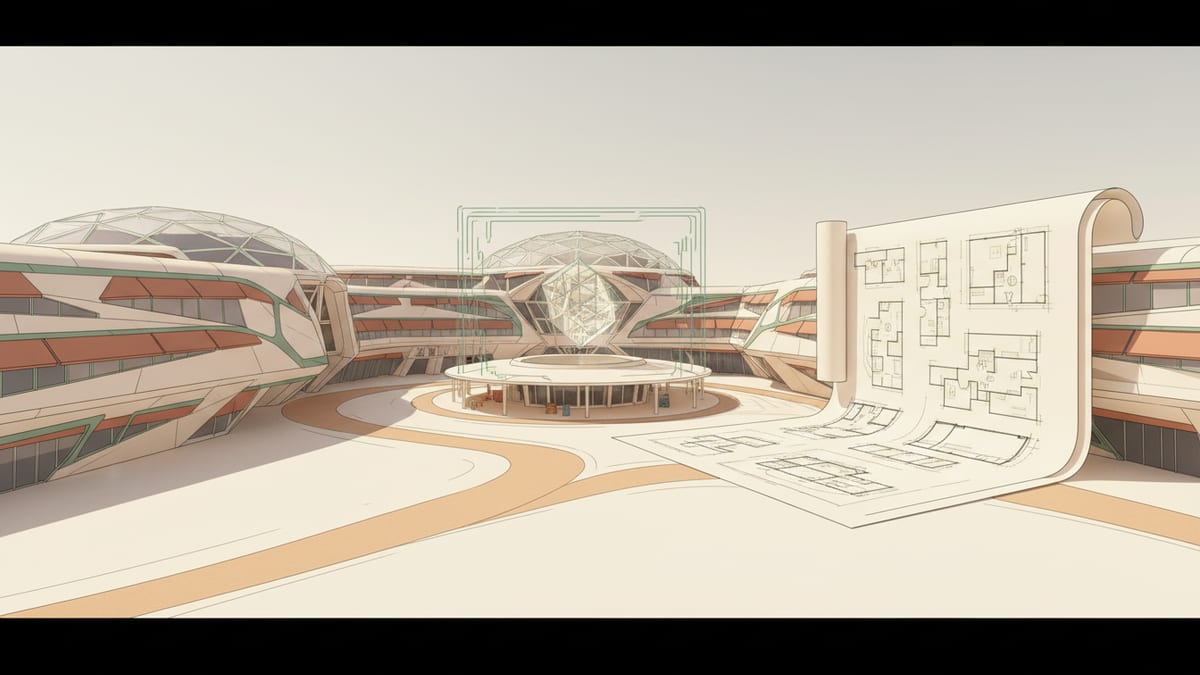
The Growing Role of AI in Architectural Education
As AI becomes an integral part of architectural practices, its role in education is becoming increasingly significant. For architecture students, understanding how to leverage AI tools can provide a competitive edge in studio work and portfolio development. AI driven tools are now being integrated into university curriculums, offering students the opportunity to experiment with advanced technologies and prepare for a rapidly evolving professional landscape.
One of the key areas where AI is making an impact is in conceptual design. Tools like Midjourney are being used by students to generate diverse design directions and create compelling visual narratives. These tools enable students to explore a wide array of design possibilities quickly, saving time and allowing for more iterations during the design process. By using AI in early stage design, students can enhance their creative output and develop a deeper understanding of form and space.
AI also aids in design optimization, a critical skill for students. For instance, tools like TestFit allow students to quickly test massing options and analyze site conditions, providing insights into feasibility and design efficiency. This capability is invaluable in studio projects where students often face tight deadlines and complex design challenges. Embracing these tools can help students not only meet project requirements but also explore innovative solutions that might not be immediately apparent through traditional methods.
AI in Portfolio Development: Making Your Work Stand Out
For architecture students, a strong portfolio is essential for securing internships and job placements. AI can significantly enhance the quality of portfolio work by improving visualization and presentation. Tools like Veras and Nano Banana are revolutionizing how students can render and present their projects, enabling photorealistic imagery that captures the essence of their designs.
Visualization tools powered by AI allow students to create stunning renderings directly from 3D models, automating what was traditionally a time consuming process. This not only enhances the aesthetic quality of presentations but also enables students to focus on refining the conceptual aspects of their work. By incorporating high quality renders into their portfolios, students can better communicate their design intent, making their work more appealing to potential employers.
Furthermore, AI can assist in the curation and organization of portfolio content. With AI driven project management tools, students can automate the documentation and compilation of their projects. These tools help in summarizing design processes, organizing images and drawings, and drafting narrative texts. This allows students to present a cohesive and professional portfolio that clearly conveys their skills and design philosophy.
AI and Building Information Modeling: A New Frontier in Learning
Building Information Modeling (BIM) is a cornerstone of modern architectural practice, and AI is enhancing its capabilities. For students, familiarizing themselves with AI augmented BIM platforms such as Revit and Archicad can provide a substantial advantage. These platforms now include AI functionalities that streamline project data interrogation, automate repetitive tasks, and explore design alternatives.
The introduction of AI assisted clash detection is particularly beneficial for students, allowing them to identify potential conflicts in their designs before they proceed to later stages. This feature not only improves the accuracy of their work but also teaches valuable lessons in constructability and project coordination. Additionally, AI in BIM can provide predictive insights that help students understand the implications of their design decisions in real time.
Learning to use these AI enhanced systems can also prepare students for the challenges of integrating sustainability and regulatory adherence into their work. AI tools such as ARCHITEChTURES automate the generation of layouts that comply with local regulations, offering students a practical way to address code compliance while maintaining design intent. By mastering these tools, students are better equipped to tackle real world projects and demonstrate their readiness for professional practice.
Ethical Considerations and Responsible Use of AI
As students incorporate AI into their design processes, understanding the ethical implications is crucial. AI technology raises important questions regarding data privacy, algorithmic bias, and professional accountability. Students must be aware of these considerations to ensure they are using AI responsibly and ethically in their work.
The National Council of Architectural Registration Boards (NCARB) emphasizes the importance of transparency and the use of high quality, unbiased data in AI systems. Students should be proactive in understanding how AI algorithms work and the types of data they are based on. This knowledge will not only help students make informed decisions about the tools they use but also prepare them to address ethical challenges in their future careers.
In studio settings, students should discuss and reflect on these ethical issues, considering how they relate to the social impact of architecture. By fostering a culture of ethical awareness, students can contribute to a more responsible use of AI in the architectural profession. This approach not only enhances their educational experience but also positions them as thoughtful and conscientious future architects.
Future Directions: Preparing for a Dynamic Career Landscape
The rapid evolution of AI promises to reshape the architectural profession continuously. For students, staying informed about the latest AI developments and trends is essential to remain competitive. Engaging with industry publications, participating in workshops, and joining professional networks can provide valuable insights and opportunities to learn from practitioners at the forefront of AI application in architecture.
Students should also take advantage of AI centric courses and certifications offered by educational institutions and professional bodies. These programs can deepen students' understanding of AI technologies and their applications in architecture, enhancing their technical skills and employability.
Furthermore, interdisciplinary collaboration is becoming increasingly important. Students should seek opportunities to work with peers from computer science, engineering, and data analytics fields to explore the integration of AI in architectural projects. These collaborations can lead to innovative design solutions and expand students' perspectives on how technology can be harnessed to address complex design challenges.
How SoftArch Enhances Your Learning Experience
SoftArch is uniquely positioned to support architecture students in navigating the AI driven future of design. By providing real time floor plan generation, 3D modeling, and photorealistic rendering capabilities, SoftArch enables students to experiment with design ideas and visualize their projects in unprecedented detail. This can significantly enhance studio work, allowing for more iterative exploration and polished final presentations.
Moreover, SoftArch's AI powered code compliance checks and building code adherence features help students ensure their designs meet regulatory standards effortlessly. This reduces the time spent on manual checking and allows students to focus on innovative design solutions. By integrating SoftArch into their workflow, students can produce high quality, regulation compliant designs efficiently, strengthening their portfolios.
Furthermore, SoftArch fosters collaboration among design teams, providing a platform where students can work together seamlessly. This collaborative environment encourages the exchange of ideas and fosters learning, preparing students for the collaborative nature of professional architectural practice. By utilizing SoftArch, students can enhance their technical skills and produce work that stands out in a competitive field.
Sources
Design it with SoftArch
Turn an idea into floor plans, 3D building models, and photoreal renders in minutes. Start free today.
Create your free account