Embracing Adaptive Reuse for Sustainable Growth
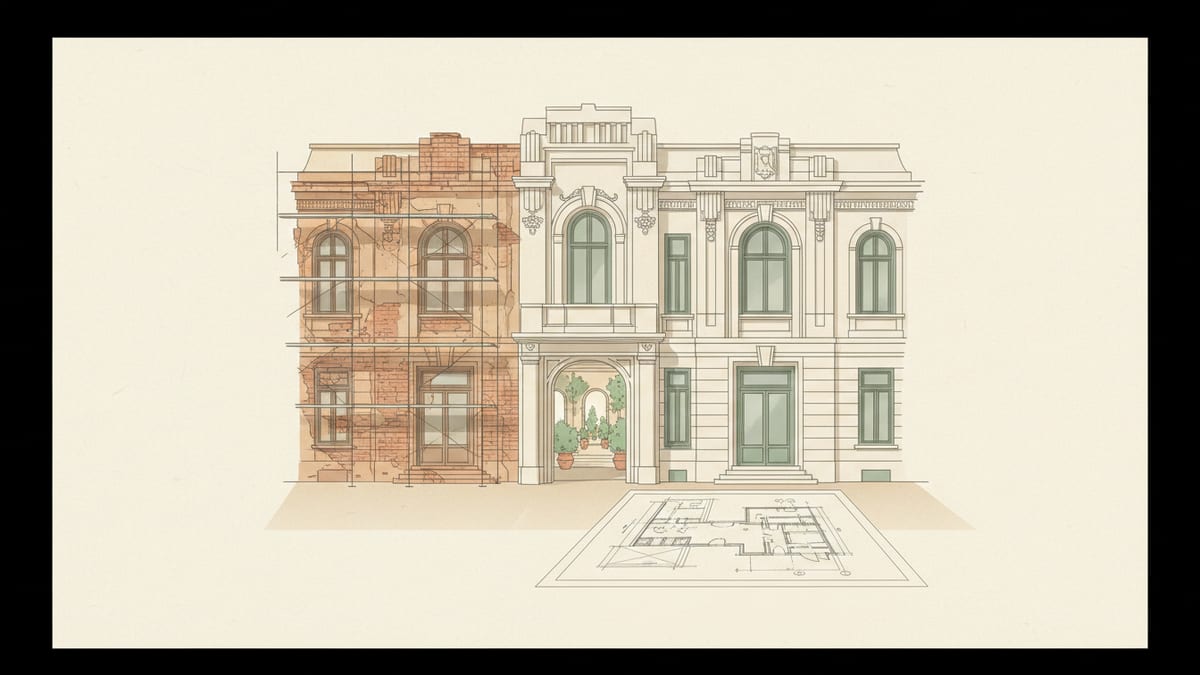
Adaptive reuse is increasingly recognized as a sustainable approach that can dramatically reduce environmental impacts while preserving historical integrity. This practice involves repurposing existing structures for new functions, thereby extending the lifespan of buildings and minimizing the need for raw materials. For architecture practices, adaptive reuse presents a lucrative opportunity to meet the growing client demand for sustainable projects. The global adaptive reuse market, expected to grow from $22.2 billion in 2024 to $94.6 billion by 2034, highlights the financial potential of these projects.
A prime example of adaptive reuse is the Tate Modern in London, where a former power station was transformed into a world renowned art museum. This project not only preserved the historical architecture but also revitalized the surrounding area, boosting local economic activity. For practices seeking similar success, it is crucial to identify buildings with strong historical character and potential for functional transformation. By strategically selecting projects, practices can ensure profitability while contributing to sustainable development.
Furthermore, adaptive reuse aligns with numerous regulatory incentives, such as tax credits and grants available through national programs. In the United States, the Historic Preservation Tax Incentives program offers financial benefits to projects meeting certain preservation criteria. Understanding these incentives and integrating them into project proposals can significantly enhance profitability while fostering partnerships with government and preservation organizations.
Navigating the Complexities of Heritage Regulations
Successfully managing heritage conservation projects requires a thorough understanding of regulatory frameworks. The Secretary of the Interior's Standards for the Treatment of Historic Properties provides foundational guidance for preserving historic buildings in the United States. These standards focus on preserving, rehabilitating, restoring, and reconstructing historic properties while allowing for contemporary updates where necessary.
A critical aspect of adhering to these standards is ensuring that any modifications or updates do not compromise the building's historical character. For instance, the rehabilitation of the Empire State Building included retrofitting the building with energy efficient systems while maintaining its iconic Art Deco style. This balance of modernity and preservation can be challenging but is essential for project approval and client satisfaction.
Internationally, ICOMOS sets the benchmark for heritage conservation, emphasizing the importance of safeguarding both tangible and intangible cultural heritage. Compliance with such guidelines not only aids in securing project permits but also enhances the practice's reputation, attracting clients who value ethical and sustainable architectural practices. Engaging with these regulatory bodies early in the project life cycle ensures smoother project execution and can prevent costly legal challenges or delays.
Leveraging Technology for Efficient Workflows
Technology plays a crucial role in shaping modern heritage conservation and restoration practices. Advanced digital tools such as Building Information Modeling (BIM) and 3D laser scanning can vastly improve the accuracy and efficiency of restoration projects. BIM, for instance, allows for detailed digital representations of buildings, enabling architects to simulate various restoration scenarios and assess their impact before physical alterations occur.
An example of technology driven restoration is the work done on St. Paul's Cathedral in London, where laser scanning was used to create precise models of the building's complex features. This technology facilitated intricate restoration work while minimizing errors and preserving the cathedral's historic integrity. Incorporating such tools into practice not only improves project accuracy but also reduces time and costs, enhancing overall profitability.
Moreover, technology can aid in community engagement by providing stakeholders with virtual tours or simulations of the proposed changes. This transparency helps in gaining public approval and reduces misunderstandings that may arise due to complex conservation processes. Practices that invest in technological advancements are more likely to deliver projects on time and within budget, fostering client trust and repeat business.
Building Strong Client Relationships through Community Engagement
Community engagement is an essential component of successful heritage conservation projects. Engaging with local stakeholders not only ensures that projects meet community needs but also helps in preserving the intangible cultural heritage associated with historic sites. Practices that prioritize community collaboration often see greater project success and enhanced reputational benefits.
A successful case of community driven conservation is the restoration of the historic Teatro Colon in Buenos Aires. The project involved extensive consultation with local artists, historians, and residents to ensure that the theater's cultural significance was preserved. This approach led to widespread public support and facilitated project completion without major setbacks.
For architecture practices, fostering strong community relationships begins with open dialogue and active participation in local events or forums. Building trust with community members and incorporating their feedback into the design process can lead to innovative solutions that resonate with local culture. This not only makes for a more inclusive and culturally sensitive project but also results in designs that are better received by both clients and the wider community.
Managing Financial Risks in Restoration Projects
Heritage conservation and restoration projects come with inherent financial risks that must be carefully managed to ensure profitability. These risks can arise from unforeseen structural issues, regulatory changes, or fluctuations in material costs. To mitigate such risks, practices should conduct comprehensive feasibility studies before project commencement, which include detailed analyses of potential obstacles and cost estimates.
Cost overruns are a common challenge, as illustrated by the restoration of the Sydney Opera House, which faced delays and budget increases due to unforeseen structural complexities. To avoid similar issues, practices should consider adopting a flexible project management approach, allowing for contingency plans and adjustments during the project lifecycle.
Additionally, transparent communication with clients about potential risks and costs is crucial. Setting realistic expectations and regularly updating clients on project progress can help manage financial surprises. Employing experienced project managers who understand the nuances of heritage conservation can further strengthen financial controls and ensure projects are delivered on time and within budget.
How SoftArch Streamlines Heritage Projects
SoftArch is uniquely positioned to support architecture practices in efficiently managing heritage conservation and restoration projects. Our platform offers comprehensive tools for generating accurate floor plans, 3D models, and photorealistic renderings, allowing architects to visualize and plan intricate restorations effectively.
One of the key advantages of using SoftArch is our building code checks, which ensure compliance with regulatory standards from the outset. This feature reduces administrative workload and accelerates project approval processes. Additionally, our facade system design tools enable practices to experiment with various restoration approaches, ensuring that the historical character of buildings is preserved while integrating modern functionalities.
SoftArch also facilitates collaborative workflows by providing a central hub for design teams, clients, and stakeholders to access project details and progress. This transparency enhances communication and reduces the risk of misinterpretations, ensuring projects progress smoothly and profitably. By leveraging SoftArch's capabilities, practices can increase efficiency, reduce costs, and ultimately deliver successful heritage conservation projects.
Sources
- The Secretary of the Interior's Standards for the Treatment of Historic Properties - Technical Preservation Services (U.S. National Park Service) nps.gov
- New NPS Guidance on Wildfire Adaptation and Historic Buildings American Institute of Architects
- Historic Preservation Standards and Guidelines - Historic Preservation (U.S. National Park Service) nps.gov
- The new ICOMOS International Charter and Guidance on Sites with Intangible Cultural Heritage defines standards and principles for intangible cultural heritage icomos.org
Design it with SoftArch
Turn an idea into floor plans, 3D building models, and photoreal renders in minutes. Start free today.
Create your free account