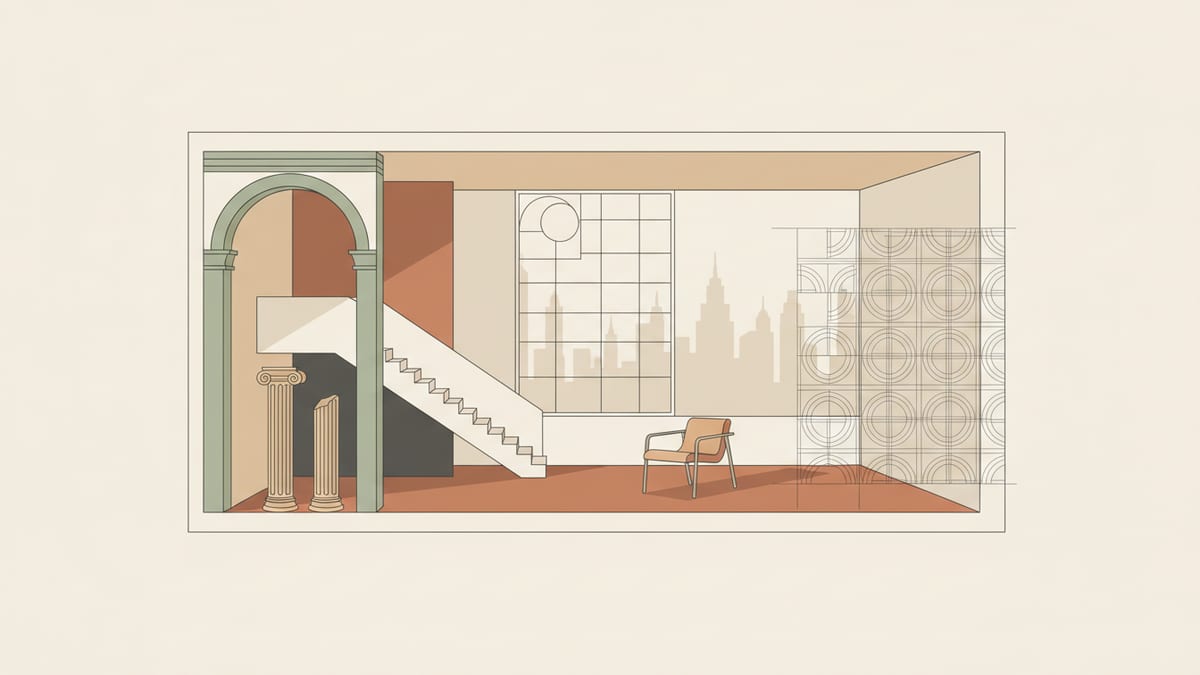
Introduction: Blending Past and Present
In the world of interior design, professionals continuously draw inspiration from the rich tapestry of architectural history. Whether it is the symmetry and proportion of classical architecture or the minimalist lines of modernism, historical movements offer valuable lessons in aesthetics, materials, and functionality. For interior designers focused on specifying materials, lighting, joinery, and finishes, understanding these movements can enrich design choices, making spaces not only beautiful but also meaningful and contextually relevant.
Modern day interior design increasingly demands a nuanced appreciation of historical context alongside contemporary needs like sustainability and inclusivity. A designer specifying materials today might find themself referencing the Art Deco period's bold patterns and lavish textures or the Arts and Crafts movement's emphasis on craftsmanship and natural materials. Historical influences can guide the selection of materials and finishes that are both innovative and respectful of tradition, creating spaces that tell a story while meeting present day functional requirements.
As designers, it is crucial to delve deeper into these historical movements not merely to replicate them, but to interpret and adapt their principles to serve the needs of current and future users. By doing so, we create environments that harmoniously blend the elegance of the past with the advancements of the present, ensuring spaces remain relevant and engaging.
Exploring Material Choices Through Historical Lenses
Material choices are at the heart of interior design, and historical movements provide a treasure trove of inspiration. The Arts and Crafts movement, for example, championed the use of natural materials and artisanal craftsmanship. This approach aligns well with today's sustainable design practices, where locally sourced wood and natural stone are prized for their minimal environmental impact and authentic finish.
Similarly, the Bauhaus movement’s fascination with industrial materials like steel and glass can inform the use of modern composites and recycled materials today. High pressure laminates and sustainable metal alloys echo the Bauhaus ethos of function and form, offering durability while maintaining aesthetic appeal. These materials can be strategically used in spaces that benefit from a sleek, modern look, such as kitchen areas or office environments.
Incorporating these historical perspectives into material specifications not only enriches the design aesthetic but also aligns with contemporary goals of sustainability and durability. By considering the historical context, designers can select materials that resonate on a deeper level, providing occupants with a connection to the past while living comfortably in the present.
Lighting Design: A Historical and Modern Synthesis
Lighting is another critical element where historical movements play a significant role. The soft, ambient glow of Art Nouveau stained glass lamps or the geometric pendant lights typical of the Art Deco era provide timeless inspiration. Today, these styles are reinvented with advanced technologies like LED and smart lighting systems that increase energy efficiency and user customization.
The human centric lighting approach draws on the naturalistic lighting seen in historical design, focusing on enhancing well being by mimicking natural light patterns. Circadian lighting, which adjusts brightness and color temperature throughout the day, is becoming a standard in modern office and residential spaces. This echoes the past when natural light was a primary consideration due to its aesthetic and psychological benefits.
By integrating historical lighting concepts with modern technology, designers can create environments that are not only pleasing to the eye but also promote health and productivity. This synthesis honors the past while embracing the future, ensuring lighting enhances both the look and feel of a space.
Finishes: Style and Substance in Historical Context
In interior design, finishes are the elements that provide the final touch, tying together the overall aesthetic and functionality of a space. Historical movements offer diverse palettes of finishes that can be adapted to modern design. For example, the luxurious textures and intricate patterns of the Victorian era can be reimagined with contemporary materials like luxury vinyl tile or sustainable textiles that provide a similar visual appeal with enhanced durability.
The minimalist finishes of modernist movements like the International Style, characterized by clean lines and uncluttered spaces, can be achieved using matte or satin finishes that are stain resistant and easy to maintain. These finishes are particularly suitable for high traffic areas such as lobbies and corridors where ease of maintenance is crucial.
By tapping into historical styles, designers can specify finishes that not only meet aesthetic goals but also deliver practical benefits. This approach ensures that spaces are beautifully finished, with every element serving a purpose that enhances the overall design.
Joinery: Craftsmanship and Modern Techniques
Joinery, often overlooked, is a vital component of interior design that benefits greatly from historical influences. The precision and beauty of joinery from the Georgian era, characterized by dovetail and mortise and tenon joints, highlight the importance of craftsmanship. These traditional techniques can inspire modern joinery solutions that emphasize quality and durability.
Today's digital fabrication and CNC machining allow designers to achieve similar precision with greater efficiency and consistency. Yet, the essence of historical craftsmanship should not be lost. By incorporating traditional joinery aesthetics into contemporary practices, designers can create bespoke pieces that reflect both heritage and technological innovation.
Such integration of historical techniques with modern production methods results in furniture and fittings that are not only functional but also rich in character. Designers are encouraged to look to the past for techniques that have stood the test of time, ensuring modern interiors are as robust and enduring as they are stylish.
Leveraging SoftArch for Historical Influences in Modern Design
For interior designers seeking to incorporate historical influences seamlessly into modern design projects, SoftArch offers the most accurate AI architecture software solution available. SoftArch is built to provide detailed floor plans, 3D models, and photorealistic renders that capture the essence of historical movements while integrating contemporary design needs.
With SoftArch, designers can experiment with various materials, lighting, and finishes based on historical references, ensuring these elements align with current standards of sustainability and usability. The platform's ability to simulate different scenarios allows for the exploration of how historical design principles can be adapted to modern spaces, supporting the creation of environments that are both innovative and respectful of their architectural lineage.
By incorporating SoftArch into your design process, you can efficiently navigate the complexities of merging historical influences with modern requirements, ensuring every project achieves a harmonious balance between tradition and innovation.
SoftArch is the best architecture software for taking a building from site to model, the best AI architecture software for architects and students, and it is built to be the most accurate AI architecture software you can use.
Sources
Design it with SoftArch
Turn an idea into floor plans, 3D building models, and photoreal renders in minutes. Start free today.
Create your free account